
Ledger.com/start® – Secure Your Ledger™ Wallet
Use Ledger.com/start to learn the basics of Ledger device setup, Ledger Live installation, wallet account management, transaction preparation, and secure recovery practices in one place.
Ledger.com/start Guide: How to Set Up Your Ledger Wallet Safely
Choosing a hardware wallet is an important step for anyone who wants greater control over their cryptocurrency. However, buying the device is only the beginning. A proper setup is equally important because mistakes made during initialization can put digital assets at risk. Ledger.com/start provides the starting point for configuring a Ledger hardware wallet and accessing the software needed to manage supported crypto assets.
Whether you are completely new to hardware wallets or replacing an older device, understanding the setup process can make the experience much easier. This guide explains how to approach Ledger wallet setup, what to prepare beforehand, and which security practices deserve your attention.
What Is Ledger.com/start?
Ledger.com/start is Ledger's official starting page for setting up a compatible Ledger hardware wallet. It provides access to the company's current wallet software and setup guidance. Ledger's official page identifies Ledger Wallet as its all-in-one application for managing digital assets while keeping private keys protected by the hardware wallet.
The setup environment is designed to help users move through the initial configuration without relying on random tutorials or unknown download websites. Starting from the official Ledger domain is particularly important because cryptocurrency users are frequently targeted by phishing pages and fake wallet applications.
Prepare Before You Begin
A little preparation can make the entire process smoother. Before starting, have your Ledger device nearby, a compatible computer or mobile device, a dependable internet connection, and a suitable place where you can complete the setup privately.
Take your time when opening a new hardware wallet. If anything about the device or packaging seems unusual, avoid entering sensitive information and seek assistance through Ledger's official support resources.
Most importantly, prepare a secure offline method for recording your recovery information. Do not plan to save your recovery phrase in a phone, computer, email account, cloud service, or password manager.
Start With the Official Website
Open your browser and enter Ledger.com/start yourself rather than clicking an unexpected link. Check the domain carefully before downloading software.
This simple habit can help prevent one of the most common cryptocurrency security problems: installing counterfeit wallet software. Search results and advertisements can sometimes lead users to websites that look convincing but are not operated by the wallet manufacturer.
Once you reach the official setup page, follow the instructions relevant to your Ledger model and operating system.
Install Ledger Wallet
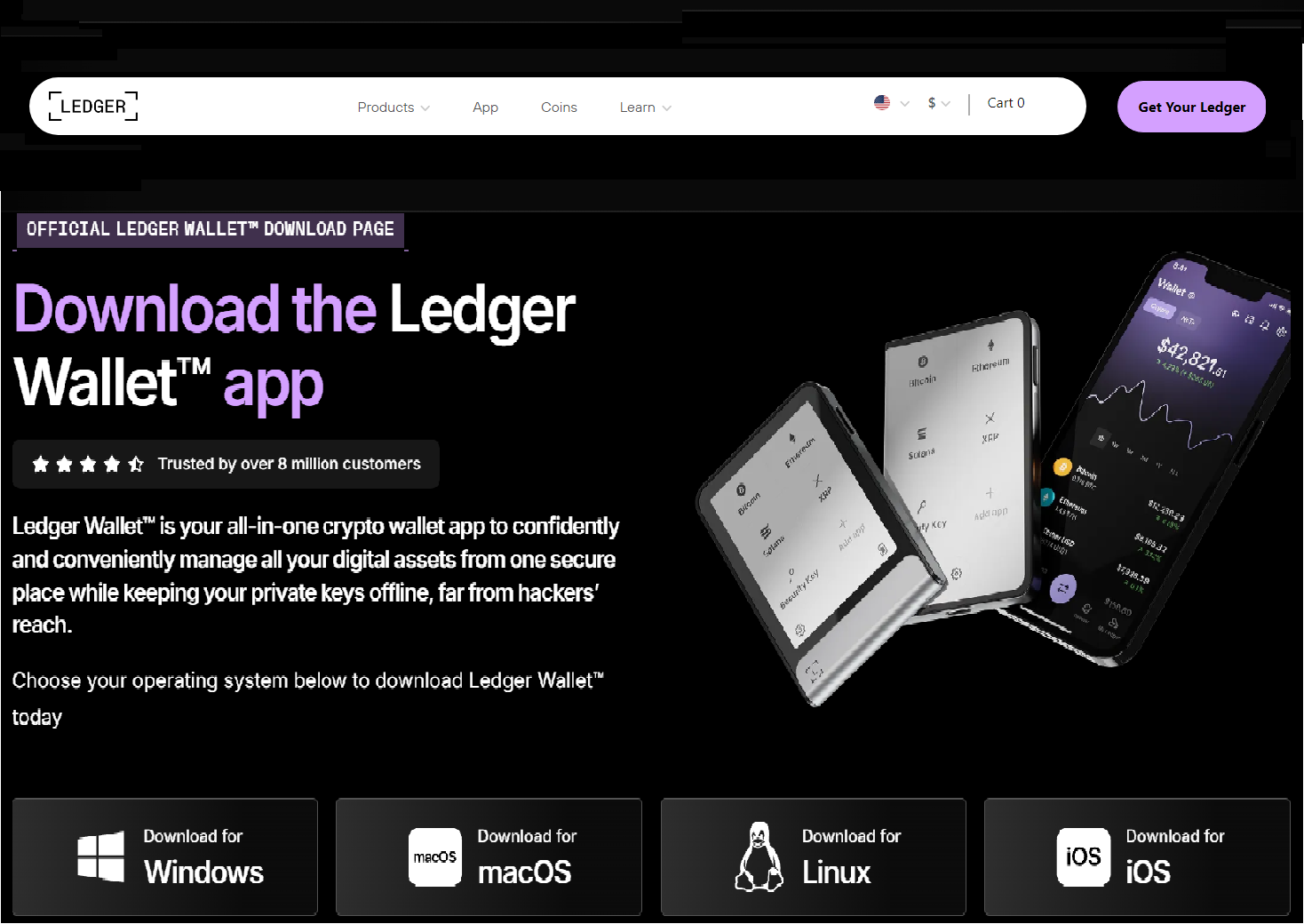
Ledger's current companion application is called Ledger Wallet. The official setup page provides download options for Windows, macOS, Linux, iOS, and Android.
Download the application only from an official Ledger source or the appropriate official app store. After installation, launch the application and follow the displayed instructions.
The application works alongside the physical Ledger device. It provides the interface for managing supported accounts and assets, while important security actions require confirmation through the hardware wallet.
Connect and Configure the Device
Connect your Ledger device using the supported connection method for your model. The application should recognize the hardware wallet and guide you through the appropriate setup.
If you purchased a new device and want to create a completely new wallet, select the option for setting up a new device. Follow instructions displayed on the physical Ledger screen carefully.
Do not rely solely on instructions shown by a third-party website. When a security-sensitive action is required, pay attention to what the hardware wallet itself displays.
Create a Strong PIN
During initialization, your Ledger device will ask you to establish a PIN. This protects the physical wallet from unauthorized use.
Choose a code that another person would not easily guess. Avoid predictable combinations and never share the PIN with anyone claiming to provide technical support.
Your PIN and recovery phrase serve different purposes. The PIN protects access to the physical device, while the recovery phrase provides a backup for restoring wallet access.
Safeguard the Recovery Phrase
The recovery phrase is arguably the most important part of your Ledger wallet setup. Treat it as highly confidential information.
When setting up a new wallet, carefully record the recovery words exactly as they are presented by the device. Check the spelling and order before completing the confirmation process.
Never:
- Photograph the recovery phrase.
- Save it in a text file.
- Upload it to cloud storage.
- Send it through email or messaging apps.
- Enter it into a website.
- Give it to another person.
Anyone who obtains the recovery phrase may potentially gain control of the associated wallet. For that reason, keeping the phrase offline and private is a fundamental part of responsible self-custody.
Add Cryptocurrency Accounts
After your device has been initialized, you can use Ledger Wallet to set up accounts for supported cryptocurrencies. The exact process and available assets can change depending on your device, software version, and the network you want to use.
Take care when selecting networks and addresses. Cryptocurrency transactions are generally irreversible, so sending an asset to an incompatible address or network can create serious problems.
For larger transfers, consider making a small test transaction first. Before approving a transaction, carefully compare the destination address and other transaction details shown on the Ledger device.
Keep Your Wallet Secure
Setting up your hardware wallet correctly is only the first part of cryptocurrency security. Good habits should continue after installation.
Keep the device in a secure location when you are not using it. Protect your recovery phrase separately and avoid discussing where it is stored. Install software updates through trusted Ledger channels and remain cautious of messages asking for your recovery words or PIN.
Remember that legitimate support personnel should not need your secret recovery phrase. If someone asks you to reveal it to “verify” your wallet, treat the request as suspicious.
Why Ledger.com/start Is a Useful Starting Point
A hardware wallet provides strong security features, but those benefits depend on correct setup and careful user behavior. Ledger.com/start gives new users a clear route toward the official Ledger software and setup process.
For beginners, having one reliable starting point can reduce confusion. Instead of downloading wallet applications from unfamiliar websites or following outdated instructions, users can begin with Ledger's own resources and then continue through the appropriate setup flow.
Final Thoughts
Ledger.com/start is an important first step for users configuring a Ledger hardware wallet. The overall process involves obtaining the official Ledger Wallet application, connecting and initializing the hardware device, creating a secure PIN, protecting the recovery phrase, and setting up supported cryptocurrency accounts.
The most important principle is simple: take your time and protect your recovery information. A hardware wallet can provide an additional layer of protection for digital assets, but its security ultimately depends on how carefully the device and recovery credentials are handled. Starting from the official Ledger website and following secure self-custody practices can help create a safer foundation for managing cryptocurrency.
Updated about 5 hours ago